No-Cook Summer Bowls
Fresh bowl ideas for hot days using canned beans, tuna, rotisserie chicken, crisp vegetables, and cold grains.
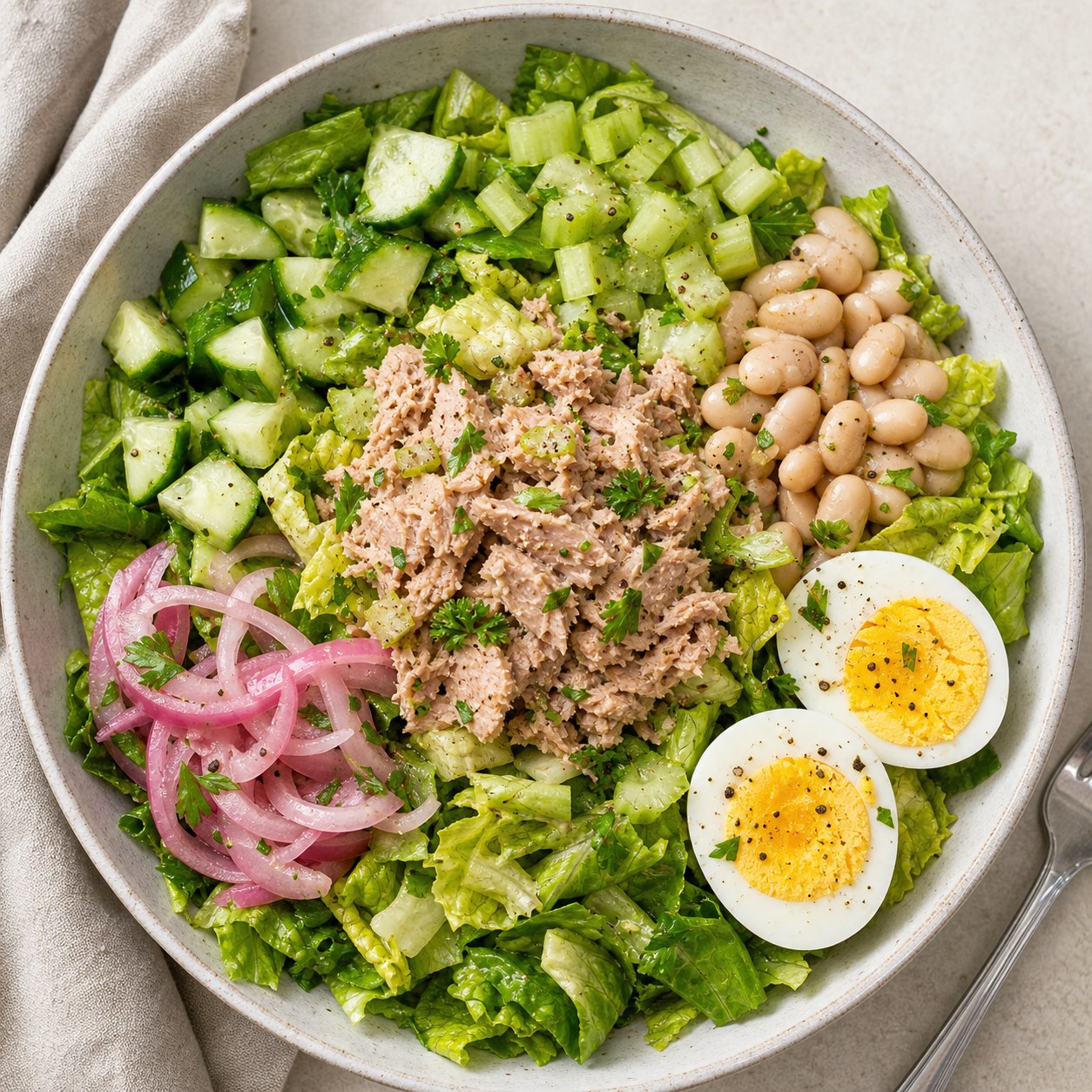
No-cook summer bowls are for hot days when turning on the stove is the wrong move. The trick is to combine ready-to-eat proteins, cold grains or greens, crisp vegetables, and a bright sauce.
Recipe card
Use this card as the working version for No-Cook Summer Bowls before reading the deeper prep and storage notes.
Ingredients
- 2 cups cooked chilled grains or sturdy greens
- 1 can chickpeas, tuna, or white beans
- 1 cup cucumber or cabbage
- 1 cup tomatoes, corn, or peppers
- 1/2 cup citrusy dressing
- Fresh herbs for finishing
Step-by-step plan
- Choose a ready-to-eat protein such as canned beans, tuna, rotisserie chicken, or boiled eggs.
- Drain canned ingredients well and pat watery vegetables dry.
- Use pre-cooked grains, leftover rice, or sturdy greens as the base.
- Make a citrusy dressing and keep it separate until serving.
- Assemble just before eating, especially if using tomatoes, cucumbers, or tender greens.
For another lunch that skips the microwave, see No-Reheat Tuna Crunch Salad Bowls. If you want no-cook bowls to last through a commute, the packing rules in How to Keep Salad Bowls from Getting Soggy and the dressing ideas in the sauce guide are the most useful companions.
Why this guide works
A good no-cook bowl still needs structure: a cold base such as greens or chilled grains, a ready-to-eat protein such as beans or tuna, a crisp vegetable, and a sauce that wakes everything up.
Cold lunch bowls depend on sturdy ingredients because there is no final blast of heat to refresh the texture.
Simple prep plan
Start by draining canned ingredients, cooling any pre-cooked grains, and patting watery vegetables dry. Those small steps matter more than cooking when the bowl will be eaten cold.
Pack the wettest ingredients away from tender greens and keep dressing in a small jar. The bowl should be ready to assemble cold, without a microwave or last-minute cooking step.
Flavor direction
Choose ingredients that are already safe and pleasant cold: canned beans, canned tuna, rotisserie chicken, cooked grains, hard-boiled eggs, crisp vegetables, and bottled or quickly whisked dressings.
If the bowl starts to taste flat, sharpen the finish before adding more ingredients. Lemon juice, vinegar, herbs, scallions, pickled onions, or toasted seeds can make a cold bowl feel freshly assembled.
Meal prep notes
For no-cook summer bowls, prep the parts that tolerate storage first: cooked chilled grains, sturdy greens, canned beans, tuna, white beans, cabbage, or chopped peppers. Hold tomatoes, herbs, avocado, and dressing until the day you plan to eat the bowl.
The most useful prep choice is moisture control. Drain canned ingredients, pat cucumber dry, and keep dressing away from greens so the bowl still has lift when it is opened.
Storage and reheating tips
No-cook summer bowls are designed to be eaten cold, so the main storage job is moisture control rather than reheating. Keep dressing, watery vegetables, and crunchy toppings separate until serving.
Label containers with the prep date and use bowls with tuna, chicken, eggs, tomatoes, or dairy dressing earlier in the week. If something smells off, looks unusual, or has been stored too long, discard it rather than trying to freshen it with dressing.
Ingredient swaps
When swapping ingredients in no-cook summer bowls, choose items that already taste good cold. White beans can replace chickpeas, cabbage can replace lettuce, and bottled salsa verde can replace a homemade dressing when the goal is a fast packed lunch.
Lean into combinations that taste intentional cold: chickpeas with lemon tahini, tuna with cucumber and herbs, or rotisserie chicken with corn, tomato, and lime.
Serving rhythm
Cold lunch bowls should be packed for texture first. If the bowl will sit for several hours, let sturdy ingredients carry the weight and save tender greens for the top layer.
Right before eating, add citrus, herbs, scallions, pickled onions, seeds, or a spoonful of sauce. That fresh finish is what keeps a no-cook lunch from tasting like ingredients from separate cans.
Food safety and allergy notes
No-Cook Summer Bowls can include fish, eggs, dairy, sesame, nuts, soy, or wheat depending on the protein and dressing. Read labels on canned fish, prepared chicken, bottled dressings, and crunchy toppings.
No-cook does not mean no food-safety plan. Keep tuna, chicken, eggs, dairy dressings, and cooked grains chilled, and use an insulated bag with an ice pack if lunch will sit away from a refrigerator.
References
These references support the storage, allergy, and balanced-meal background used in No-Cook Summer Bowls. They are general cooking references, not medical advice.
- USDA Food Safety and Inspection Service: Leftovers and Food Safety
- FoodSafety.gov: Cold Food Storage Chart
- U.S. Food and Drug Administration: Food Allergies, What You Need to Know
- Harvard T.H. Chan School of Public Health: The Healthy Eating Plate
Practical tips
- Drain canned ingredients until they stop dripping.
- Keep dressing, avocado, tomatoes, and herbs separate until serving.
- Use an insulated lunch bag when the bowl cannot stay refrigerated.
FAQ
Can I make no-cook summer bowls ahead?
Yes. Pack sturdy beans, grains, tuna, chicken, or chopped vegetables ahead, then add dressing, avocado, herbs, and crunchy toppings right before eating.
What belongs in a no-cook bowl?
Use ready-to-eat proteins, cold grains or greens, crisp vegetables, and a punchy sauce. Avoid anything that needs browning or reheating to taste finished.
Friendly note
This guide is for general home cooking inspiration. Adjust ingredients for your household, check labels for allergens, and follow safe storage practices.