Quinoa Black Bean Bowls
A vegetarian bowl with quinoa, black beans, corn, cabbage, avocado, and lime vinaigrette.
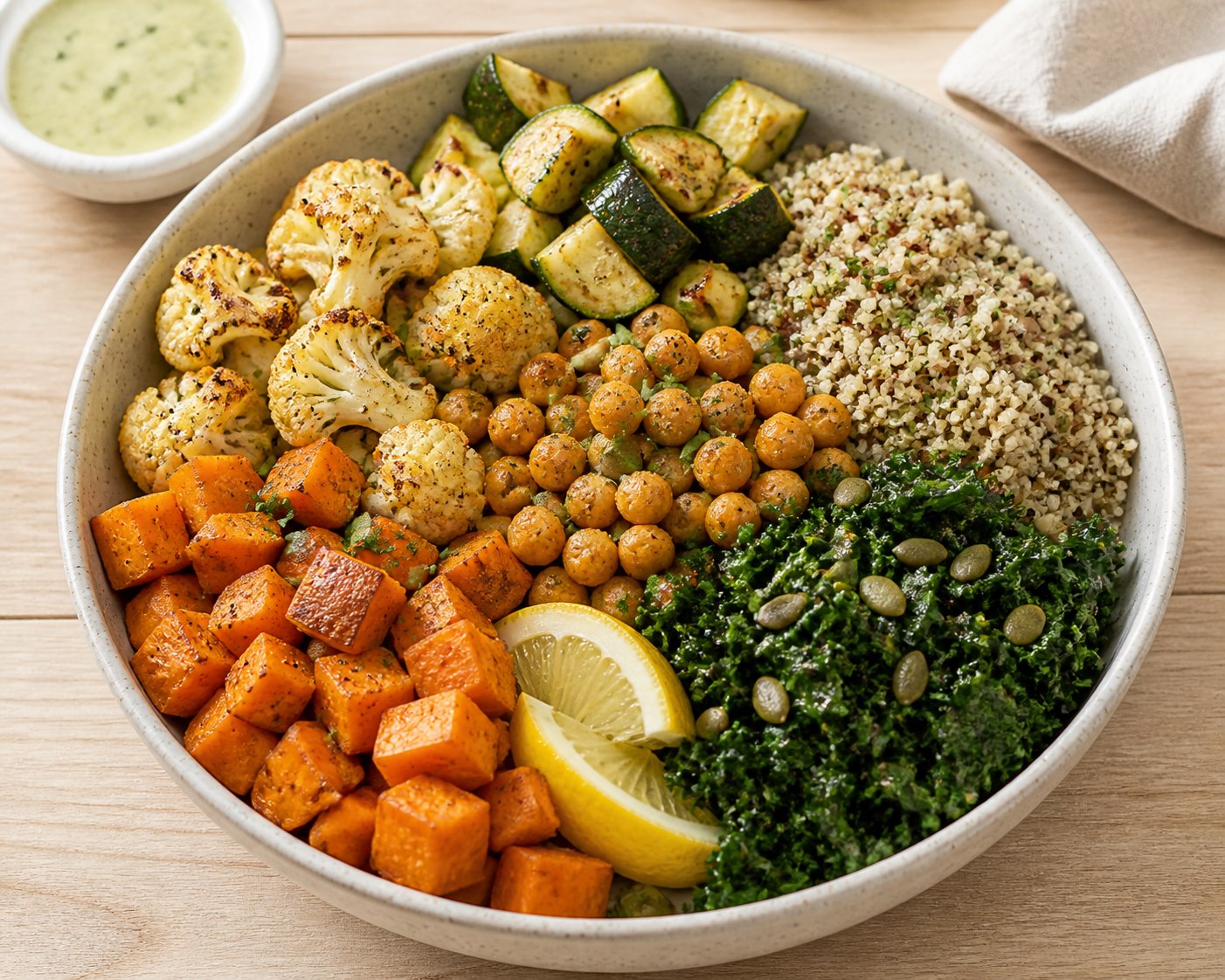
Quinoa black bean bowls are a simple vegetarian lunch base with enough protein, fiber, and texture to carry the week. Lime, cumin, cabbage, corn, and avocado keep the flavor clear.
Recipe card
Use this card as the working version for Quinoa Black Bean Bowls before reading the deeper prep and storage notes.
Ingredients
- 2 cups cooked quinoa
- 1 can black beans, rinsed
- 1 cup corn
- 2 cups shredded cabbage
- 1 avocado, sliced
- 1/2 cup lime vinaigrette
- Cilantro and pumpkin seeds for finishing
Step-by-step plan
- Cook the grain or base first, then spread it on a plate or shallow container for 8 to 10 minutes so steam can escape before packing.
- Cook or warm the protein until it is hot throughout. For cooked chicken or beans, the center should be steaming; for eggs or tofu, the texture should feel firm rather than watery.
- Chop vegetables into bite-size pieces, then pat watery vegetables such as cucumber or tomatoes dry with a towel before packing.
- Whisk or portion the sauce in a small jar. If it is thick, loosen it with 1 teaspoon of water at a time until it pours easily from a spoon.
- Pack warm ingredients on one side and cold ingredients on the other. Reheat only the warm section, then add sauce and crisp toppings after reheating.
For a Mediterranean version of the same grain-and-legume idea, read Mediterranean Chickpea Grain Bowls. If you need more vegetarian protein choices, use High-Protein Vegetarian Bowls, then finish the bowl with a dressing from the sauce guide.
Why this guide works
Quinoa Black Bean Bowls starts with 2 cups cooked quinoa, then builds around 1 can black beans, rinsed and 1 cup corn. That combination gives the bowl a clear base, enough substance, and something fresh or crisp in the same container.
Vegetarian bowls need protein, sauce, and texture to feel complete enough for a full lunch or dinner.
Simple prep plan
For quinoa black bean bowls, prepare the ingredient that takes longest first, then work toward the pieces that should stay fresh. This keeps the cooking session orderly and prevents hot food from steaming delicate toppings.
Before packing, choose whether the quinoa and beans will be reheated or served cold. Either way, avocado, cilantro, cabbage, lime vinaigrette, and seeds keep better when they are added after the base is portioned.
Flavor direction
For swaps, stay close to the lime-cumin direction. Pinto beans, roasted peppers, cabbage, pepitas, salsa verde, Greek yogurt lime sauce, or pickled onions all fit without making the bowl feel crowded.
If the bowl starts to taste flat, adjust the finish before adding more ingredients. Citrus, herbs, scallions, toasted seeds, pickled onions, or a small spoonful of sauce can make quinoa black bean bowls feel fresh without rebuilding the whole recipe.
Meal prep notes
For quinoa black bean bowls, prep the parts that tolerate storage first: 2 cups cooked quinoa, 1 can black beans, rinsed, and 1 cup corn. Hold delicate toppings until the day you plan to eat the bowl.
The most useful prep choice is to separate ingredients by temperature and texture. For quinoa black bean bowls, anything warm, saucy, or heavy should not sit directly on the freshest toppings for several days.
Storage and reheating tips
Quinoa Black Bean Bowls reheats best when the warm base is stored apart from the cold finish. Reheat the grain, protein, beans, or roasted vegetables first, then add herbs, cucumber, avocado, greens, or dressing afterward.
Label containers with the prep date and use the most delicate vegetarian bowls meals earlier in the week. If something smells off, looks unusual, or has been stored too long, discard it rather than trying to rescue the bowl with sauce.
Ingredient swaps
When swapping ingredients in quinoa black bean bowls, keep the same role in the bowl. Replace a grain with another grain, a creamy sauce with another creamy sauce, and a crunchy vegetable with something that still adds bite.
For quinoa black bean bowls, use lime and cumin as the anchor. Corn, cabbage, avocado, pumpkin seeds, and cilantro all fit that direction, so the bowl stays flexible without becoming random.
Serving rhythm
Vegetarian bowls need protein and texture in the same bite. Beans, tofu, lentils, seeds, or yogurt sauces can make the bowl feel complete without adding meat.
Before serving, add lime, cilantro, scallions, pickled onions, pepitas, or a spoonful of salsa. That finish keeps the beans and quinoa from tasting dry.
Food safety and allergy notes
Quinoa Black Bean Bowls are often flexible, but toppings and sauces can add dairy, soy, sesame, nuts, wheat, or egg. Keep avocado, crema, seeds, and dressing separate when serving people with different needs.
Cool quinoa and beans before sealing containers, then refrigerate promptly. Reheat the grain and beans if serving warm, and add cabbage, avocado, cilantro, and lime vinaigrette after reheating.
References
These references support the storage, allergy, and balanced-meal background used in Quinoa Black Bean Bowls. They are general cooking references, not medical advice.
- USDA Food Safety and Inspection Service: Leftovers and Food Safety
- FoodSafety.gov: Cold Food Storage Chart
- U.S. Food and Drug Administration: Food Allergies, What You Need to Know
- Harvard T.H. Chan School of Public Health: The Healthy Eating Plate
Practical tips
- Choose one sauce before choosing extra toppings.
- Do not pack hot food directly with crisp greens.
- Use leftovers intentionally rather than mixing unrelated flavors.
FAQ
Can I prep quinoa black bean bowls ahead?
Yes. Cook quinoa and portion beans ahead, then keep avocado, cabbage, cilantro, lime vinaigrette, and crunchy seeds separate until serving.
How do quinoa black bean bowls avoid tasting dry?
Use enough lime vinaigrette or salsa to coat the quinoa, and add one juicy or crisp element such as corn, cabbage, pickled onions, or avocado.
Friendly note
This guide is for general home cooking inspiration. Adjust ingredients for your household, check labels for allergens, and follow safe storage practices.