Salmon Rice Bowls with Cucumber and Avocado
A simple rice bowl with flaky salmon, cucumber, avocado, scallions, and sesame dressing.
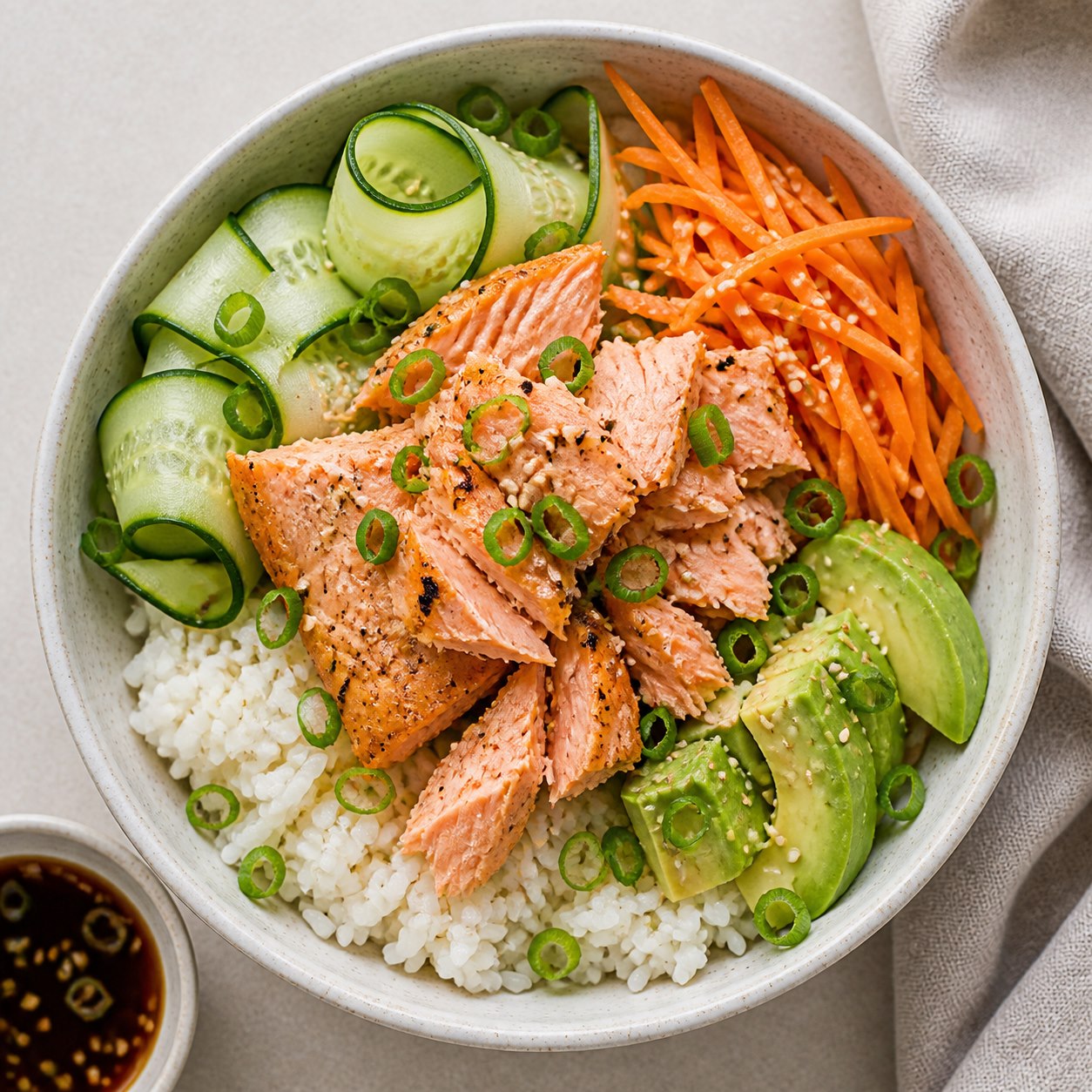
Salmon rice bowls work when the fish stays flaky and the toppings stay cool. Cucumber, avocado, scallions, rice, and a light ginger dressing keep the bowl balanced instead of heavy.
Recipe card
Use this card as the working version for Salmon Rice Bowls with Cucumber and Avocado before reading the deeper prep and storage notes.
Ingredients
- 2 cups cooked rice
- 3 cooked salmon fillets, flaked
- 1 cup cucumber ribbons
- 1 avocado, sliced
- 1 cup shredded carrots
- 2 tablespoons scallions
- 1/3 cup ginger soy dressing
Step-by-step plan
- Bake salmon at 400°F for 12 to 15 minutes, depending on thickness.
- Check doneness by pressing the thickest part gently with a fork. It should flake easily and look opaque in the center; an instant-read thermometer should read 145°F for fully cooked salmon.
- Let salmon cool for 5 minutes, then flake it into large pieces so it does not dry out.
- Portion rice into bowls, then add cucumber, avocado, carrots, and scallions after the salmon cools.
- Keep ginger soy dressing separate. Serve cold, or gently reheat only the rice and salmon before adding fresh toppings.
For salmon bowls, sauce and storage matter more than extra toppings. Use Five Simple Sauces That Make Meal Prep Bowls Better for ginger soy or sesame options, How to Keep Salad Bowls from Getting Soggy for moisture control, and Best Containers for Meal Prep Bowls if you need a separate cup for dressing.
Why this guide works
Salmon can dry out if it is reheated aggressively, so this bowl is built to work warm, cold, or gently reheated. Rice gives it a steady base, while cucumber, avocado, carrots, and scallions keep the bowl from feeling heavy.
The dressing should support the salmon rather than hide it. A light ginger soy sauce or sesame vinaigrette gives salt and acid without turning the fish into a wet topping.
Simple prep plan
Cook the rice first, then bake the salmon while slicing cucumber, carrots, and scallions. Let the salmon cool for a few minutes before flaking so the pieces stay large and do not dry out.
Decide before packing whether the bowl will be cold or partly reheated. If reheating, keep cucumber, avocado, scallions, and dressing separate from the rice and salmon.
Flavor direction
For salmon rice bowls, the contrast should stay clean: warm rice and flaky salmon with cool cucumber, avocado, scallions, and a light soy ginger dressing. Heavy sauces can hide the salmon.
If the bowl starts to taste flat, adjust the finish before adding more ingredients. Citrus, herbs, scallions, toasted seeds, pickled onions, or a small spoonful of sauce can make salmon rice bowls with cucumber and avocado feel fresh without rebuilding the whole recipe.
Meal prep notes
For salmon rice bowls, prep rice and salmon first, then cool both before adding fresh toppings. Large salmon flakes hold texture better than tiny broken pieces.
Keep avocado and dressing separate until serving. If packing avocado ahead, add lemon or lime and press it into a small airtight cup to slow browning.
Storage and reheating tips
Reheat gently if serving warm: use a lower microwave setting or shorter bursts so the salmon does not toughen. Add cucumber, avocado, scallions, and dressing only after warming.
Label containers with the prep date and use salmon bowls earlier in the week. If the fish smells off, looks unusual, or has been stored too long, discard it.
Ingredient swaps
When swapping, keep the delicate balance. Rice can become sushi rice or quinoa, cucumber can become cabbage, avocado can become edamame, and ginger soy dressing can become a light sesame vinaigrette.
For salmon rice bowls, the contrast should stay clean: warm rice and flaky salmon with cool cucumber, avocado, scallions, and a light soy ginger dressing. Heavy sauces can hide the salmon.
Serving rhythm
The serving plan should protect the salmon flakes and keep the cold toppings crisp. Add dressing in a thin drizzle rather than stirring hard through the whole container.
Before serving, add scallions, sesame seeds, lime, cucumber, or a small spoonful of ginger soy dressing. A clean finish is better than a heavy sauce here.
Food safety and allergy notes
Salmon Rice Bowls with Cucumber and Avocado may include common allergens depending on the swaps used, including milk, eggs, fish, shellfish, tree nuts, peanuts, wheat, soy, or sesame. Check labels and avoid cross-contact when cooking for anyone with allergies.
For cooked ingredients in salmon rice bowls with cucumber and avocado, BowlPrep Daily uses conservative storage language and refers readers to official food safety resources for leftovers, cold storage, and allergens.
References
These references support the storage, allergy, and balanced-meal background used in Salmon Rice Bowls with Cucumber and Avocado. They are general cooking references, not medical advice.
- USDA Food Safety and Inspection Service: Leftovers and Food Safety
- FoodSafety.gov: Cold Food Storage Chart
- U.S. Food and Drug Administration: Food Allergies, What You Need to Know
- Harvard T.H. Chan School of Public Health: The Healthy Eating Plate
Practical tips
- Flake salmon into large pieces so it does not dry out in storage.
- Reheat salmon gently, or serve the bowl cold with extra dressing.
- Add avocado and cucumber after warming the rice.
FAQ
Can I prep salmon rice bowls with cucumber and avocado ahead?
Yes, but use them earlier in the week. Store rice and salmon separately from cucumber, avocado, scallions, and ginger soy dressing.
What should stay separate for salmon rice bowls?
Keep avocado, cucumber, scallions, sesame seeds, and dressing separate from any rice or salmon you plan to warm.
Friendly note
Salmon Rice Bowls with Cucumber and Avocado is for general home cooking inspiration. Adjust ingredients for your household, check labels for allergens, and follow safe storage practices.